
Graphite Powder
Artificial Graphite Powder
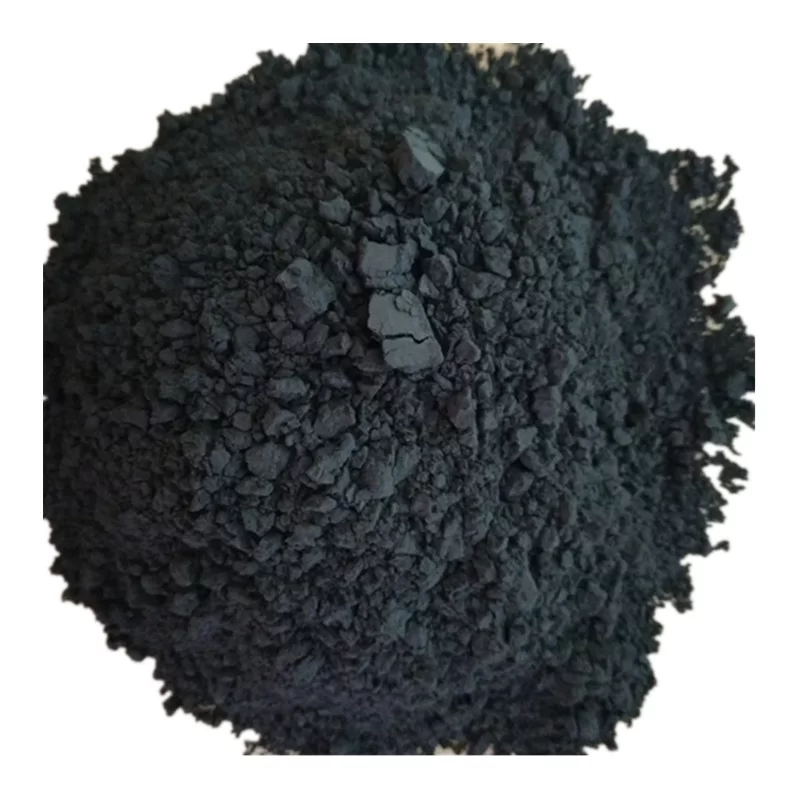
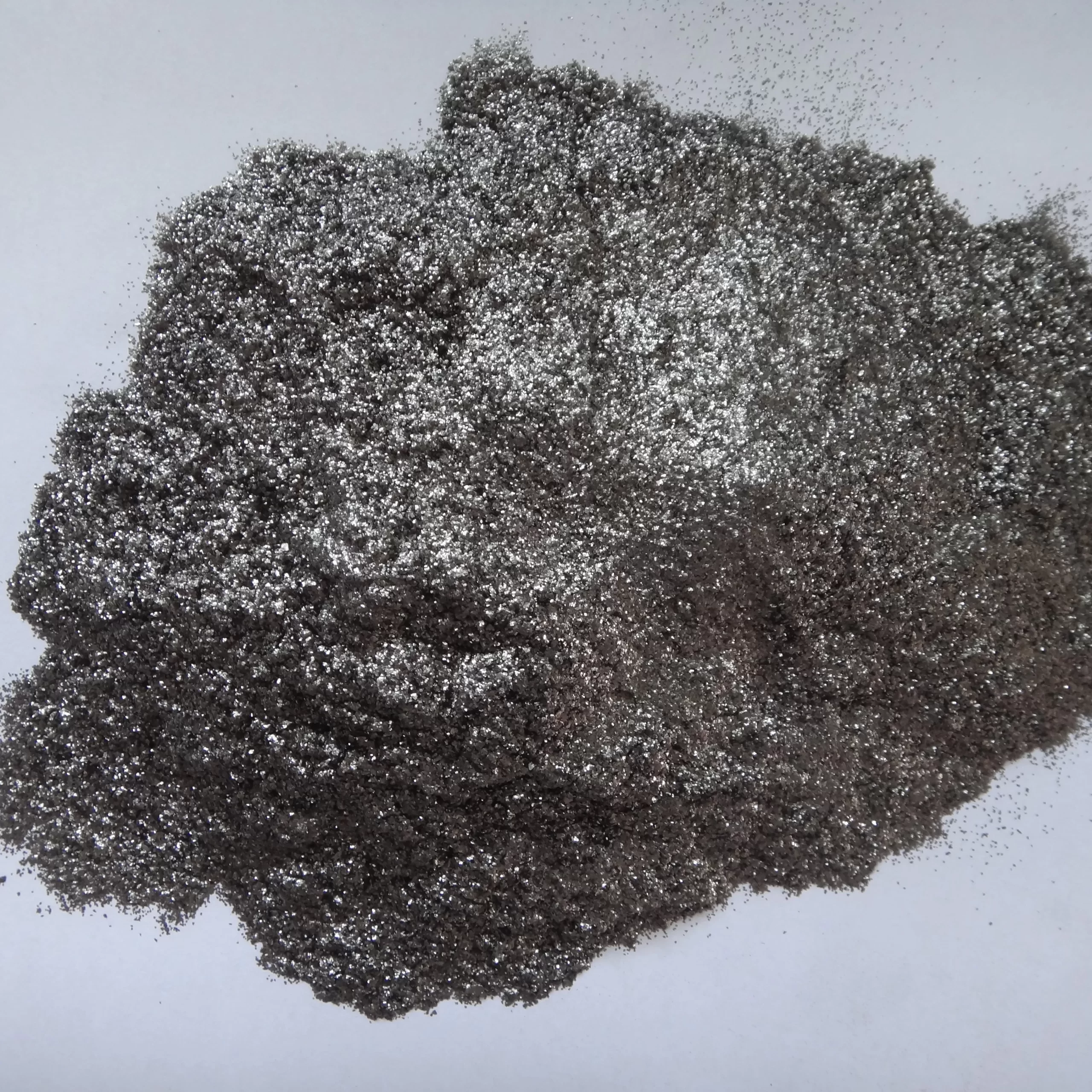
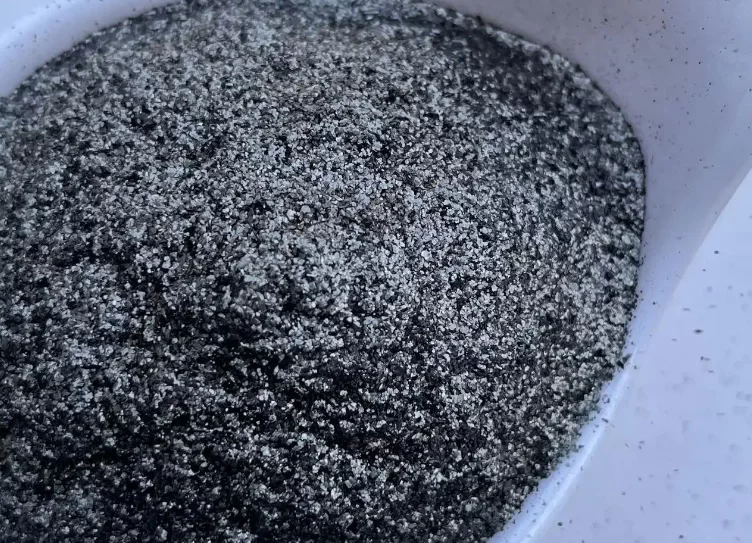
Graphite powder is a kind of mineral powder, mainly composed of simple carbon, soft, black gray; It is greasy and can contaminate the paper.
 Click thumbnails to view
Natural flake graphite is widely used as an essential nonmetalic mineral in almost all industries.
Confirm the required specification, quantity and destination.
Send Requirement →Natural flake graphite is widely used as an essential nonmetallic mineral in almost all industries. Derived from premium-grade natural mineral deposits, our Natural Graphite Powder exhibits an exceptionally well-ordered crystalline structure, superior thermal and electrical conductivity, and remarkable chemical stability. It has perfect crystallization, good flexibility and conductivity, excellent chemical and physical properties, as well as good self-lubricancy and resistance to high temperature, corrosion and hot shock, and much more. The crystal is crystallized with good lubricity, heat-conducting, high temperature resistance, heat-resistance. Integrality, reliable and constant performance.
In modern manufacturing, the demand for high-purity, structurally consistent carbon materials continues to rise. Whether deployed in metallurgy, advanced energy storage systems, high-temperature refractory manufacturing, or specialized friction materials, our natural graphite powder delivers consistent and reliable performance under the most demanding industrial conditions. Our state-of-the-art purification and milling techniques ensure strict particle size distribution, optimal carbon content purity, and minimal moisture levels, giving global manufacturers a distinct competitive edge in product quality, operational efficiency, and cost-effectiveness.
Superior Electrical & Thermal Conductivity: Outstanding conductivity coefficients make it an ideal choice for advanced energy applications, conductive coatings, brushes, and specialized thermal management solutions.
Exceptional Thermal Resistance & Stability: Features an extremely high melting point and resilience against intense thermal shock, enabling it to endure extreme operational temperatures without structural degradation.
Natural Self-Lubricating Properties: Features a low coefficient of friction derived from its unique layered crystal structure, making it perfect for high-performance lubricants, industrial greases, and powder metallurgy components.
Chemical Inertness & Corrosion Resistance: Demonstrates high resistance to acids, alkalis, and aggressive chemical environments, ensuring long-term operational durability and reliability in harsh chemical processing settings.
High Crystallinity & Structural Integrity: Well-ordered carbon atom lattice provides exceptional structural strength, oxidation resistance, and dependable consistency batch after batch.
To accommodate diverse industrial specifications, we offer customized graphite grades meticulously categorized by fixed carbon purity, mesh particle size, and expansion characteristics:
Our standard flake series is divided into High Purity Graphite (≥99.9% fixed carbon, ≤0.3% moisture), High Carbon Graphite (≥94%–99.5% fixed carbon, ≤0.5% moisture), and Medium Carbon Graphite (≥80%–93% fixed carbon, ≤1% moisture). All products maintain a high granularity index exceeding 80.0% across mesh distributions ranging from coarse 32 mesh to ultra-fine 325 mesh.
Engineered specifically for intumescent flame retardants, high-temperature sealing, and gasket manufacturing, featuring high expansion rates ranging from 100 ml/g up to 400 ml/g across mesh sizes from 32 mesh to 150 mesh. These grades boast fixed carbon contents between 85.00% and 99.50% with rapid activation starting at temperatures ≥950°C.
Due to its versatile physicochemical profile, our natural graphite powder serves as an indispensable raw material across numerous global sectors:
Used extensively in the production of magnesia-carbon bricks, crucibles, continuous casting protective slags, and mold wash coatings, significantly enhancing thermal shock resistance and slag erosion defense in steelmaking.
Serves as a vital precursor and conductive additive for lithium-ion battery anodes, fuel cells, and supercapacitors, leveraging its exceptional electron mobility and structural stability.
Expandable graphite variants function as high-efficiency intumescent fire retardants in construction materials, plastics, textiles, and industrial dynamic sealing gaskets.
Widely incorporated into automotive brake linings, clutch facings, and industrial dry-film lubricants to minimize mechanical friction, reduce noise, and prevent surface wear under heavy loads.
Our products are exported to many countries such as the US, the UK, South Korea, Vietnam, Turkey, Russia and all Middle East countries. We adheres to the business principles of “Quality First, Customer First, Loyalty and Trustworthiness”, and is committed to helping users solve practical problems and serving our customers wholeheartedly!
We implement rigorous quality inspection protocols prior to shipment, provide customizable packaging solutions (including moisture-proof woven bags and bulk ton bags), and offer dedicated logistics support to guarantee safe, prompt delivery to your manufacturing facilities worldwide. Contact our engineering and sales team today to request product samples or discuss tailor-made specifications for your upcoming projects.
Natural Graphite Powder is produced from naturally occurring graphite mineral deposits and retains the characteristic crystalline structure formed in nature. Unlike manufactured graphite, natural graphite is not created through a high-temperature synthetic graphitization route. Instead, the natural mineral is purified and milled into industrial grades while maintaining the properties associated with its well-ordered graphite structure.
The most important structural characteristic is the flake lattice. Carbon atoms are arranged in layered graphite crystals, giving natural graphite good flexibility, conductivity and self-lubricating behavior. The layered structure also contributes to its resistance to high temperatures, corrosion and thermal shock. These characteristics make flake graphite powder suitable for applications where graphite needs to provide more than simply a source of carbon.
The supplied product information describes the material as having perfect crystallization, good flexibility, thermal and electrical conductivity, chemical stability, self-lubricancy and reliable performance. These properties are directly relevant to industrial material selection because the role of graphite can vary considerably between different formulations.
The standard flake series is classified according to fixed carbon content and particle size. High-purity graphite provides ≥99.9% fixed carbon with ≤0.3% moisture, high-carbon graphite provides ≥94%–99.5% fixed carbon with ≤0.5% moisture, and medium-carbon graphite provides ≥80%–93% fixed carbon with ≤1% moisture. The granularity index exceeds 80.0% across mesh distributions ranging from 32 mesh to 325 mesh.
This specification range allows manufacturers to select a natural graphite grade according to actual process requirements. A formulation requiring high carbon purity can be matched with the high-purity grade, while other applications may require a different carbon level or particle distribution.
The natural origin of the material is therefore an important part of its technical identity. Natural Graphite Powder combines a naturally formed crystalline structure with controlled purification and milling. For engineers and procurement teams, evaluating crystallinity together with fixed carbon, moisture and mesh size provides a more meaningful basis for material selection than relying on appearance or the general name graphite powder.
The combination of conductivity, thermal resistance, chemical stability, lubricity and natural flake structure allows flake graphite powder to serve several industrial sectors. The correct grade depends on the role graphite performs in the final material, so carbon content, particle size and application conditions should be considered together.
In refractories and metallurgy, natural graphite is used in magnesia-carbon bricks, crucibles, continuous casting protective slags and mold wash coatings. In related metallurgical supply chains, foundry coke may also be sourced for separate high-temperature carbon applications, although its function should be distinguished from that of natural graphite.The supplied product information identifies thermal shock resistance and resistance to slag erosion as important characteristics in these applications. Graphite can therefore function as an important component in refractory systems exposed to high temperatures and demanding metallurgical conditions.
Battery and energy-storage applications represent another major field. Natural graphite is used as a precursor and conductive additive for lithium-ion battery anodes, fuel cells and supercapacitors. Its electrical conductivity and stable crystalline structure make it suitable for these material systems. When selecting Natural Graphite Powder for energy-related applications, manufacturers should pay close attention to fixed carbon, moisture and particle-size requirements.
Natural graphite also has applications in sealing and flame-retardant materials. The supplied expandable graphite series is designed for intumescent flame retardants, high-temperature sealing and gasket manufacturing. These grades should be evaluated separately from standard flake graphite because their intended function involves expansion characteristics.
The lubricants and friction-material sector makes use of graphite's naturally layered structure. The supplied product information identifies automotive brake linings, clutch facings and industrial dry-film lubricants as applications. The ability of graphite layers to move relative to one another contributes to its self-lubricating characteristics and makes it useful in friction-control formulations.
For industrial buyers, the application should determine the material specification. A refractory manufacturer may focus on thermal and chemical stability, while an energy-material producer may prioritize carbon purity and particle distribution. A friction-material manufacturer may place greater emphasis on crystallinity and lubricating behavior.
Natural graphite may also appear in broader carbon-material purchasing programs. For example, a metallurgical buyer may source graphite together with recarburizer for separate carbon-related processes. These materials should remain technically differentiated because they serve different functions.
The versatility of flake graphite powder therefore comes from the combination of several intrinsic properties rather than one isolated characteristic. Selecting the appropriate grade according to the actual application helps manufacturers use natural graphite more effectively within their production processes.
For manufacturers consuming graphite regularly in production, bulk graphite powder offers a practical way to align material grade, technical requirements and overall production economics. The cost-performance value of natural graphite should not be judged only by its purchase price. Its naturally formed crystalline structure, conductivity, lubricity, thermal resistance and availability in different grades all contribute to its industrial value.
The supplied standard flake series provides high-purity, high-carbon and medium-carbon options. High-purity graphite contains ≥99.9% fixed carbon, high-carbon graphite contains ≥94%–99.5% fixed carbon, and medium-carbon graphite contains ≥80%–93% fixed carbon. This allows manufacturers to select a grade according to the actual purity requirement instead of automatically using the highest specification.
Particle size is another factor in production economics. Standard flake graphite is available across mesh distributions from 32 mesh to 325 mesh, with a granularity index exceeding 80.0%. Choosing a suitable particle size can help manufacturers match the graphite to their existing formulation or processing requirements without unnecessarily changing the material specification.
Natural graphite also provides several functional properties within the same material. For procurement teams comparing carbon materials, searches such as coke coal for sale relate to a different material category and should not be used as a substitute for graphite when the formulation specifically requires natural flake graphite.Its thermal and electrical conductivity support energy and high-temperature applications, while its layered structure provides self-lubricating behavior for friction-related materials. Its resistance to chemical environments and thermal shock further expands its industrial utility.
The expandable graphite series provides another distinct material option. These grades have expansion rates ranging from 100 ml/g to 400 ml/g, fixed carbon contents from 85.00% to 99.50%, and activation temperatures beginning at ≥950°C. They are intended for applications including intumescent flame retardants, high-temperature sealing and gasket manufacturing. Because their function differs from standard flake graphite, they should be specified separately during procurement.
For bulk graphite powder, the most effective purchasing strategy is to establish the required technical grade before comparing material cost. A formulation that only requires a medium-carbon grade does not necessarily benefit from purchasing a high-purity grade, while an application with strict carbon requirements should not sacrifice the required specification simply to reduce material cost.
Natural graphite therefore provides a useful range of technical and economic choices. By matching fixed carbon, moisture and particle size with the intended production process, manufacturers can avoid over-specification while maintaining the required performance of the finished material.
Selecting high purity graphite powder for an industrial formulation should begin with the technical role graphite needs to perform. Natural graphite is available in several fixed-carbon grades and particle-size ranges, so the correct choice depends on the requirements of the formulation rather than simply selecting the highest available purity.
Fixed carbon is the first major checkpoint. The supplied high-purity natural graphite grade provides ≥99.9% fixed carbon with ≤0.3% moisture. High-carbon graphite provides ≥94%–99.5% fixed carbon with ≤0.5% moisture, while medium-carbon graphite provides ≥80%–93% fixed carbon with ≤1% moisture. These specifications give engineers clear criteria for determining which grade corresponds to the required carbon level.
Particle size should then be considered. The standard flake series covers mesh distributions from 32 mesh to 325 mesh, with a granularity index exceeding 80.0%. The required mesh should be connected to the actual formulation and processing method. A coarse flake and a finer graphite grade should not automatically be treated as interchangeable because their physical behavior within a material system can differ.
The next consideration is whether the project requires standard flake graphite or expandable graphite. Expandable grades are designed for applications involving expansion, including intumescent flame retardants, high-temperature sealing and gasket manufacturing. Their expansion rate ranges from 100 ml/g to 400 ml/g according to the supplied specifications.
Moisture is another purchasing checkpoint. The available standard grades have different moisture limits according to their carbon classification. Confirming the moisture requirement before approval helps manufacturers maintain a consistent material specification.
For formulation projects, Natural Graphite Powder should therefore be evaluated through fixed carbon, moisture, particle size and graphite type. The goal is not to choose the highest specification automatically, but to identify the grade that provides the characteristics required by the final material.
Once the technical requirements have been established, they can be incorporated into the purchasing specification and used for sample evaluation and batch inspection. This creates a more consistent basis for comparing graphite materials from different sources.
The natural flake structure remains an important part of the selection process. high purity graphite powder combines the naturally formed graphite lattice with controlled purification and milling, making its technical grade easier to define according to carbon purity and particle distribution.
Natural graphite and artificial graphite powder both contain graphite structures, but their origins and production routes are different. Natural graphite is obtained from mineral deposits and processed through purification and milling, while artificial graphite is manufactured through a controlled high-temperature graphitization process. This difference should be considered when engineers select a graphite material for a specific production process.
Natural Graphite Powder retains the natural flake structure formed within the mineral deposit. The supplied product information emphasizes its crystallinity, flexibility, conductivity, chemical stability, self-lubricancy, high-temperature resistance and resistance to corrosion and thermal shock. These characteristics support applications across refractories, metallurgy, energy storage, sealing and friction materials.
Artificial graphite follows a manufactured route in which carbon is graphitized under controlled high-temperature conditions. The appropriate choice between the two materials should therefore be based on the required technical characteristics rather than a general assumption that one material is always superior.
For natural graphite, fixed-carbon classification provides a clear basis for selection. The supplied high-purity grade reaches ≥99.9% fixed carbon, while high-carbon and medium-carbon grades cover lower specified ranges. Standard flake particle sizes extend from 32 mesh to 325 mesh. These parameters allow manufacturers to match natural graphite with the requirements of their formulation.
Crystal structure is also important when the graphite's lubricating behavior is required. The layered structure of natural flake graphite supports self-lubrication, making it relevant to friction materials and dry-film lubrication applications. Its conductivity and thermal characteristics similarly support conductive and high-temperature material systems.
The comparison should therefore focus on the actual production requirement. If the application is designed around natural flake graphite and its associated crystallinity, conductivity and lubricating characteristics, natural graphite may be the appropriate material. If a process requires characteristics associated with manufactured graphitized carbon, artificial graphite should be evaluated against its own technical specifications.
For procurement teams, the best approach is to establish measurable criteria before selecting a material. Fixed carbon, moisture, mesh size and the required functional properties should be identified first. The available natural graphite grade can then be compared directly with the process requirements.
This application-based method also helps avoid unnecessary material substitution. bulk graphite powder should be evaluated according to its specific grade and intended function rather than treated as a generic commodity.
Ultimately, natural and artificial graphite are related materials with different production backgrounds. Understanding the distinction allows engineers to make a more informed selection based on the actual requirements of the finished product and manufacturing process.
Common purchasing and product questions answered before you send an inquiry.
Product FAQs are being prepared.
Graphite powder is a kind of mineral powder, mainly composed of simple carbon, soft, black gray; It is greasy and can contaminate the paper.
Ready to source