
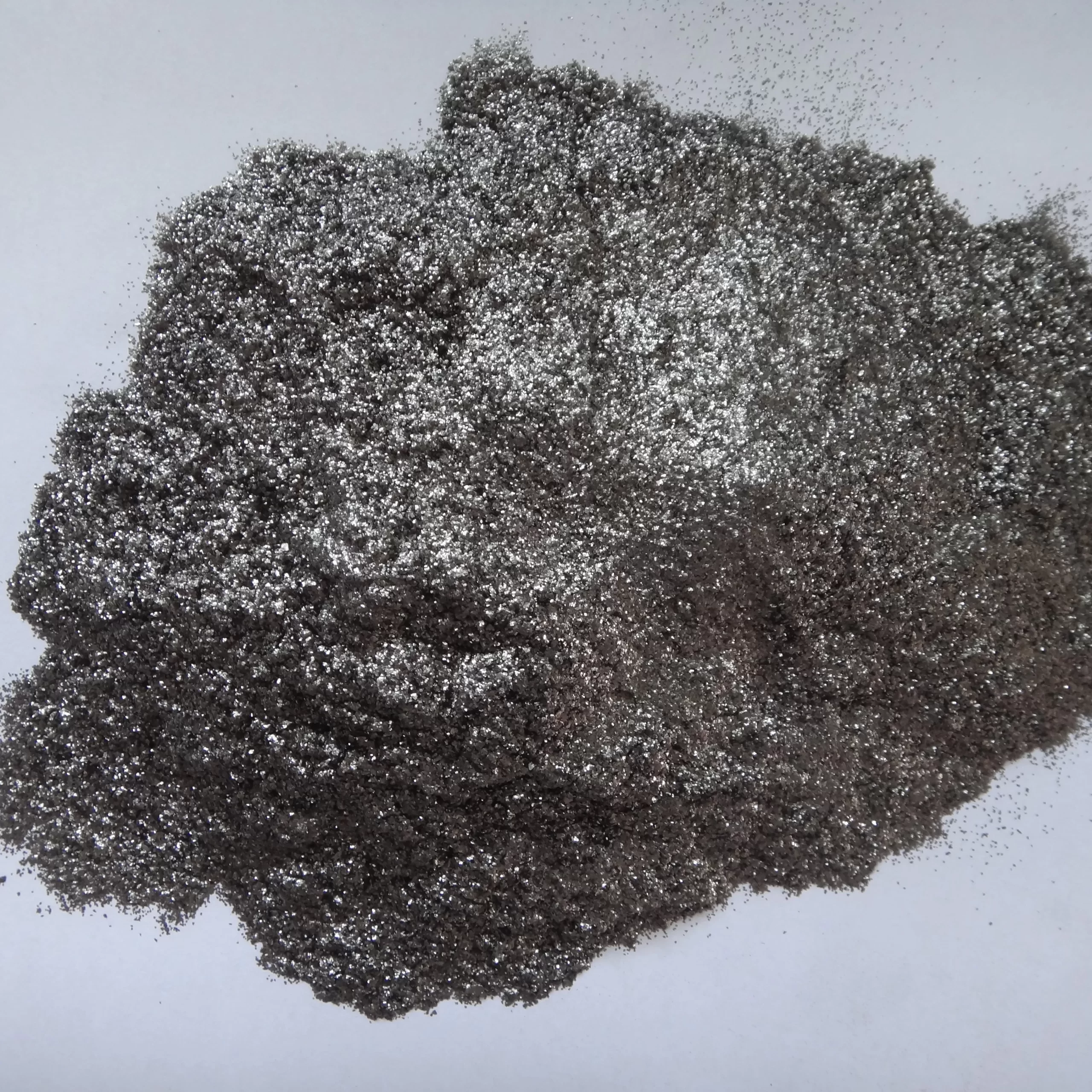
Graphite Powder
Natural Graphite Powder
Natural flake graphite is widely used as an essential nonmetalic mineral in almost all industries.
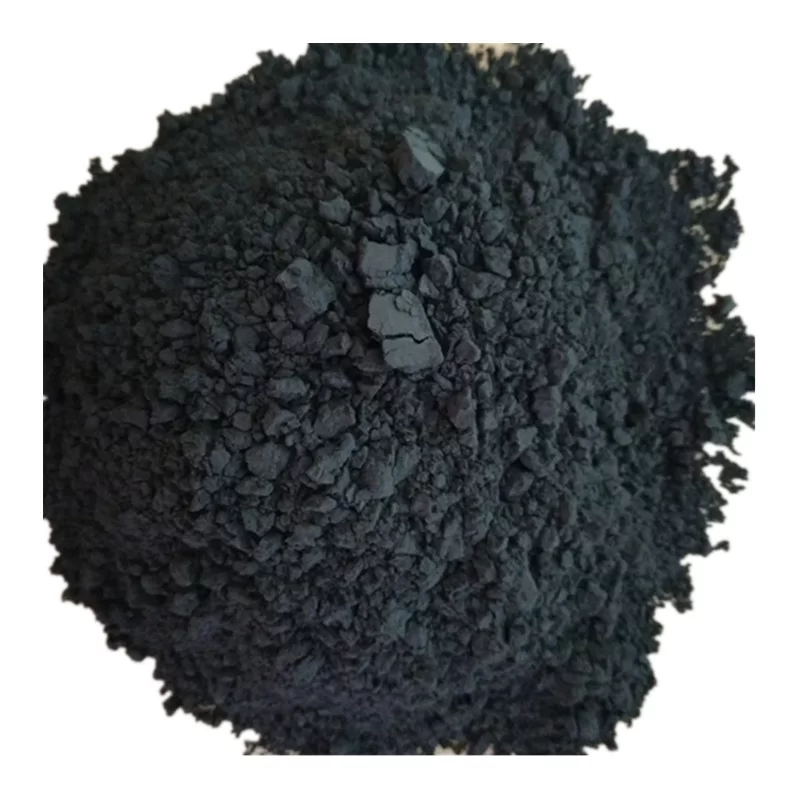
 Click thumbnails to view
Graphite powder is a kind of mineral powder, mainly composed of simple carbon, soft, black gray; It is greasy and can contaminate the paper.
Confirm the required specification, quantity and destination.
Send Requirement →Graphite powder is a specialized mineral powder primarily composed of elemental carbon. It features a soft texture and a characteristic black-gray color. Known for its greasy feel, it can easily leave marks on paper. As an advanced manufactured variant, Artificial Graphite Powder is engineered under controlled high-temperature graphitization processes, delivering exceptional purity, precise structural characteristics, and superior thermal and electrical performance compared to natural alternatives.
Hardness: Typically ranges from 1 to 2 on the Mohs scale, and can increase to 3–5 along the vertical direction as impurity levels vary.
Specific Gravity: Ranges strictly between 1.9 and 2.3, ensuring stable density metrics for industrial formulations.
Ultra-High Temperature Resistance: Under conditions of complete oxygen isolation, its melting point exceeds an astounding 3000 °C, placing it among the most temperature-resistant minerals available on the market.
Chemical Stability: At room temperature, artificial graphite powder exhibits superior chemical stability. It is completely insoluble in water, dilute acids, dilute alkalis, and standard organic solvents.
Core Performance Advantages: The material boasts outstanding high-temperature resilience, exceptional thermal conductivity, and high electrical conductivity.
Due to its unique combination of thermal, electrical, and lubricating properties, our artificial graphite powder is widely utilized across multiple heavy industries:
Used in high-temperature furnace linings, crucibles, and protective coatings due to its extreme melting point and thermal shock resistance.
Essential additive for battery components, conductive pastes, carbon brushes, and specialized electronic elements requiring low electrical resistance.
Acts as a solid lubricant in mechanical seals, brake pads, and high-pressure greases to minimize friction and wear under extreme loads.
We offer customized particle size distributions and purity tiers tailored to your precise manufacturing requirements. Refer to our standard technical parameter matrix below:
| Graphite Variety | Specification | Expansion Ratio (ml/g) | PH Value | Volatile (%) | Moisture (%) | Carbon Content (%) | Sieve / Under Sieve | Sulfur Content (%) | Expansion Temp (°C) |
|---|---|---|---|---|---|---|---|---|---|
| Ordinary | 32Mesh | 200-600 | 3-8 | ≤16 | ≤1 | 90-99 | ≥800 | ≤2.5 | 190-950 |
| 50Mesh | 200-450 | ||||||||
| 80Mesh | 200-350 | ||||||||
| 100Mesh | 150-320 | ||||||||
| 150Mesh | 150-250 | ||||||||
| Superfine | -100Mesh | 50-100 | 3-8 | ≤10 | ≤1 | 90-98 | ≥80.0 (Under sieve) | ≤2.5 | 180-950 |
| -200Mesh | 30-70 | ||||||||
| 325Mesh | 10-30 | ||||||||
| Low sulfur | 32Mesh | 200-400 | 3-8 | ≤12 | ≤1 | 90-99 | ≥800 | ≤0.02 | 200-950 |
| 50Mesh | 200-350 | ||||||||
| 80Mesh | 150-250 | ||||||||
| 100Mesh | 100-200 | ||||||||
| High purity | 32Mesh | 200-500 | 3-8 | ≤15 | ≤1 | ≥99.9 | ≥800 | ≤2.5 | 200-950 |
| 50Mesh | 200-450 | ||||||||
| 80Mesh | 200-350 | ||||||||
| 100Mesh | 200-250 |
* Note: The indicators and specifications can be custom-adjusted according to specific customer requirements.
Artificial Graphite Powder is a manufactured graphite material whose physical and chemical characteristics are closely related to its high-temperature graphitization process. Unlike a naturally occurring graphite mineral, artificial graphite is produced through controlled processing to develop the characteristic graphite crystal structure. For industrial users, this production route is important because the resulting material can be evaluated according to defined carbon content, sulfur level, particle size, moisture and other technical indicators.
The graphite crystal structure consists of carbon atoms arranged in hexagonal layers. These layers are responsible for several characteristic graphite properties, including its softness, thermal conductivity, electrical conductivity and solid-lubricating behavior. During high-temperature graphitization, the carbon structure becomes more ordered, creating the structural basis for the functional characteristics expected from manufactured graphite.
For synthetic graphite powder, the production process is an important consideration when comparing materials from different sources. The material should be evaluated not only by appearance but also by measurable specifications such as carbon content, sulfur, particle size, moisture and volatile matter.
The supplied Artificial Graphite Powder range covers ordinary, superfine, low-sulfur and high-purity grades, with different mesh sizes and chemical specifications for industrial applications:
Grade | Available Mesh | Carbon Content | Sulfur Content | Moisture | Volatile Matter |
Ordinary | 32–150 Mesh | 90–99% | ≤2.5% | ≤1% | ≤16% |
Superfine | -100 / -200 / 325 Mesh | 90–98% | ≤2.5% | ≤1% | ≤10% |
Low Sulfur | 32–100 Mesh | 90–99% | ≤0.02% | ≤1% | ≤12% |
High Purity | 32–100 Mesh | ≥99.9% | ≤2.5% | ≤1% | ≤15% |
This range allows buyers to match synthetic graphite powder with specific purity, impurity-control and particle-size requirements. The available mesh specifications extend from conventional grades to superfine material, while the low-sulfur and high-purity options provide additional selection criteria for applications requiring tighter chemical control.
The distinction between manufactured and natural graphite becomes especially important when consistency is a priority. Artificial Graphite Powder provides a controlled production route and a range of documented specifications, allowing engineers to define purchasing requirements using measurable technical parameters rather than relying only on the generic term graphite powder.
The combination of high-temperature resistance, thermal conductivity, electrical conductivity and chemical stability makes high purity graphite powder suitable for industrial environments where material performance must remain reliable under demanding conditions. These properties are closely associated with graphite's carbon structure and are reflected in the technical characteristics provided for the artificial graphite grades.
According to the supplied product information, graphite can withstand extremely high temperatures under complete oxygen isolation, with a melting point exceeding 3000 °C. This characteristic supports its use in high-temperature applications where thermal exposure is a major consideration.
Thermal conductivity is another important property. Graphite can transfer heat effectively while maintaining its characteristic structure under suitable operating conditions. This makes artificial graphite relevant to industrial materials where heat transfer and high-temperature resistance are both important.
Electrical conductivity provides another major functional advantage. Artificial Graphite Powder can be used in conductive materials because its graphite structure supports electrical conduction. The supplied applications include battery components, conductive pastes, carbon brushes and specialized electronic elements.
Chemical stability is also part of the supplied product profile. At room temperature, the material is insoluble in water, dilute acids, dilute alkalis and standard organic solvents. This property can be relevant when graphite powder is incorporated into industrial formulations that require chemical stability.
The available purity levels provide additional selection flexibility. The high-purity grade specifies ≥99.9% carbon, while ordinary grades are specified within the 90–99% carbon range. For applications where impurity control is particularly important, these documented differences provide a practical basis for selecting an appropriate grade.
The supplied physical properties also include a specific gravity of 1.9–2.3. Hardness is typically 1–2 on the Mohs scale, with the supplied product description noting that hardness can vary with impurity levels.
For procurement engineers, the value of high purity graphite powder should therefore be assessed through the complete specification rather than a single performance claim. Carbon content, sulfur, moisture, volatile matter, particle size and other available indicators should be matched with the actual requirements of the manufacturing process.
Conductive graphite powder combines electrical conductivity with thermal conductivity, high-temperature resistance and graphite's characteristic layered structure. These properties allow artificial graphite to serve different functions across industrial applications, with the required grade depending on the operating conditions and technical requirements of the finished material.
Refractory applications represent an important use area. The supplied product information identifies high-temperature furnace linings, crucibles and protective coatings as applications for artificial graphite powder. Its high-temperature resistance is particularly relevant in these environments, where materials must remain stable under severe thermal exposure.
Particle size is an important consideration when graphite is incorporated into a refractory formulation. The supplied range covers ordinary grades from 32 mesh through 150 mesh and superfine grades including -100 mesh, -200 mesh and 325 mesh. Selecting the appropriate size should be based on the requirements of the specific formulation rather than simply choosing the finest available powder.
Electrical applications represent another major area. Artificial Graphite Powder is identified for battery components, conductive pastes, carbon brushes and specialized electronic elements. In these applications, carbon content and particle characteristics should be evaluated alongside electrical requirements.
The supplied high-purity grade reaches ≥99.9% carbon, providing a distinct specification for applications where high carbon purity is required. Other grades offer different carbon and impurity specifications, giving manufacturers more than one option when evaluating material requirements.
Graphite's layered crystal structure also contributes to its solid-lubricating behavior. The layers can move relative to each other, allowing graphite powder to function as a solid lubricant in applications such as mechanical seals, brake pads and high-pressure greases. This makes graphite relevant not only to conductive and refractory materials but also to wear-resistant material systems.
Industrial buyers should therefore avoid evaluating conductive graphite powder according to conductivity alone. Depending on the application, thermal resistance, carbon content, sulfur level, particle size and chemical stability may be equally important.
The supplied application profile demonstrates that artificial graphite powder can serve several industrial functions while remaining the same fundamental material category. The correct grade is determined by the technical requirements of the process, the desired particle distribution and the required purity or impurity limits.
The difference between artificial graphite and natural graphite powder begins with their production routes. Natural graphite originates from naturally occurring mineral deposits, while artificial graphite is manufactured through a controlled high-temperature graphitization process. Although both materials have the characteristic graphite structure, their origins and specification methods are different.
Graphite is characterized by a layered crystal structure in which carbon atoms form hexagonal arrangements. This structure contributes to graphite's softness, thermal conductivity, electrical conductivity and lubricating behavior. For industrial applications, understanding this structure helps explain why graphite can perform several different functional roles.
With Artificial Graphite Powder, the controlled manufacturing process provides a defined basis for establishing different technical grades. The supplied product range includes ordinary, superfine, low-sulfur and high-purity specifications. These grades are differentiated through measurable indicators including carbon content, sulfur, moisture, volatile matter and particle size.
For example, the high-purity grade specifies carbon content of ≥99.9%, while the low-sulfur grade specifies sulfur at ≤0.02%. These values give procurement teams objective criteria for evaluating the material against application requirements.
Particle size is another important distinction in practical material selection. Artificial graphite is supplied in several ordinary mesh sizes as well as superfine specifications. This means the buyer can define the required powder distribution according to the intended process rather than treating all graphite powder as having identical particle characteristics.
The comparison with natural graphite powder should therefore not be reduced to the question of which material is universally better. The appropriate material depends on the technical requirements of the application. If a manufacturing process requires specific carbon purity, sulfur control or defined particle-size characteristics, these parameters should be compared directly with the relevant natural or artificial graphite grade.
For engineers, the production route is particularly useful when assessing consistency. Artificial graphite is manufactured through a controlled process, while natural graphite characteristics are connected with the mineral source. The final purchasing decision should consequently consider the complete technical specification instead of relying solely on the material name.
This specification-based approach also helps avoid unnecessary substitution. Even though both materials are graphite, they should only be considered alternatives when their relevant technical characteristics meet the requirements of the same industrial process.
Selecting graphite powder 200 mesh requires a clear understanding of the required particle-size specification and the other technical indicators that accompany it. Mesh size is important, but it should not be considered independently from carbon content, sulfur, moisture, volatile matter, purity and the intended industrial application.
The supplied artificial graphite range includes ordinary grades of 32 mesh, 50 mesh, 80 mesh, 100 mesh and 150 mesh, together with superfine grades of -100 mesh, -200 mesh and 325 mesh. When a production process calls for a specific particle distribution, the requested specification should be confirmed against the supplier's technical data rather than assuming that similar mesh descriptions represent identical materials.
Carbon content should be checked as a separate purchasing parameter. The supplied ordinary grades specify carbon content of 90–99%, while the high-purity grade reaches ≥99.9%. This difference can be significant when graphite is being incorporated into a material where carbon purity is part of the technical requirement.
Sulfur content should also be verified directly. The supplied low-sulfur grade specifies sulfur at ≤0.02%, while other grades have different limits. A procurement specification should clearly identify the acceptable sulfur level when impurity control is important.
Moisture and volatile matter are also included in the technical matrix. Ordinary grades specify moisture at ≤1% and volatile matter at ≤16%, while the other grade categories have their own stated limits. These parameters should be reviewed according to the actual production process.
The supplied technical specifications also include pH value, specific gravity and expansion ratio. Expansion-ratio values vary according to the listed grade and mesh specification, so the appropriate value should be checked against the exact material being purchased.
When evaluating graphite powder or another required particle size, procurement teams can therefore establish a specification covering particle size, carbon content, sulfur, moisture and volatile matter before comparing suppliers. This provides a more reliable basis for material approval than comparing price or appearance alone.
The available ordinary, superfine, low-sulfur and high-purity grades also provide flexibility in material selection. According to the supplied product information, the indicators and specifications can be adjusted according to specific customer requirements.
For manufacturers evaluating Artificial Graphite Powder, the most practical purchasing method is to connect every selected parameter with a real production requirement. Particle size should support the required material distribution, carbon content should match the purity requirement, sulfur should remain within the acceptable limit, and moisture and volatile matter should correspond to the process conditions. This creates a clear technical basis for selecting the appropriate graphite grade.
As an industry-leading manufacturer of carbon and graphite products, we ensure rigorous quality control across every production stage. Whether you need standard mesh sizes or customized low-sulfur and high-purity variants, our technical team is ready to support your business with stable supply chains, competitive pricing, and professional application guidance. Contact us today to request a free sample or customized technical datasheet.
Common purchasing and product questions answered before you send an inquiry.
Product FAQs are being prepared.
Natural flake graphite is widely used as an essential nonmetalic mineral in almost all industries.
Ready to source