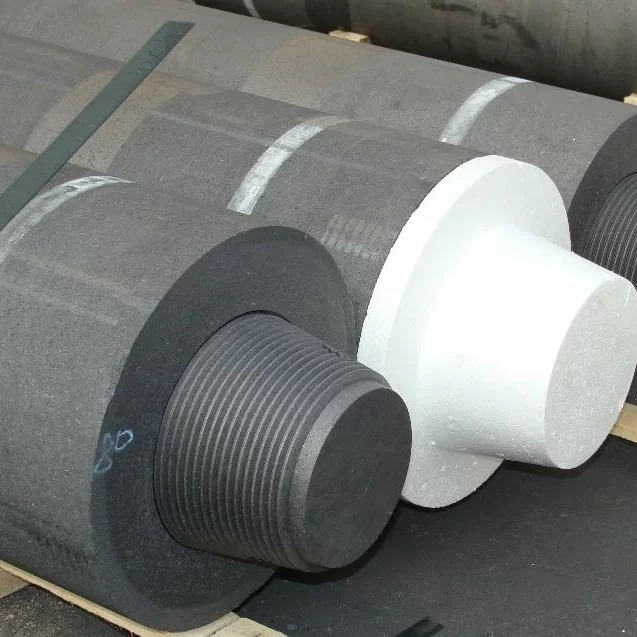
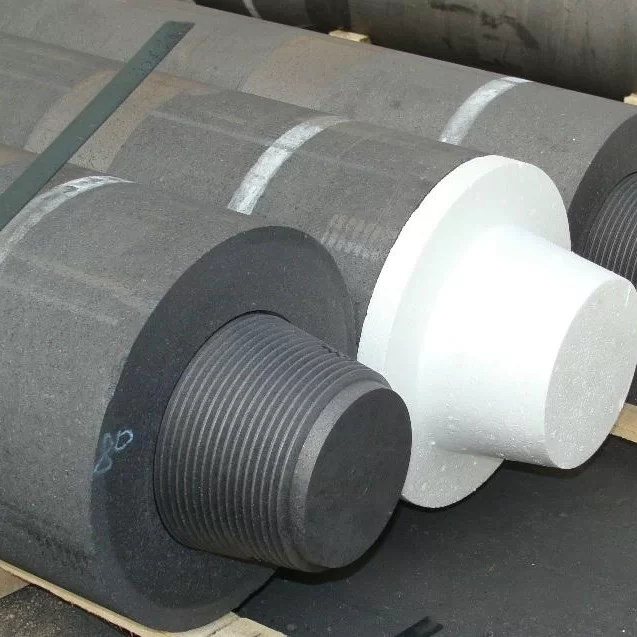
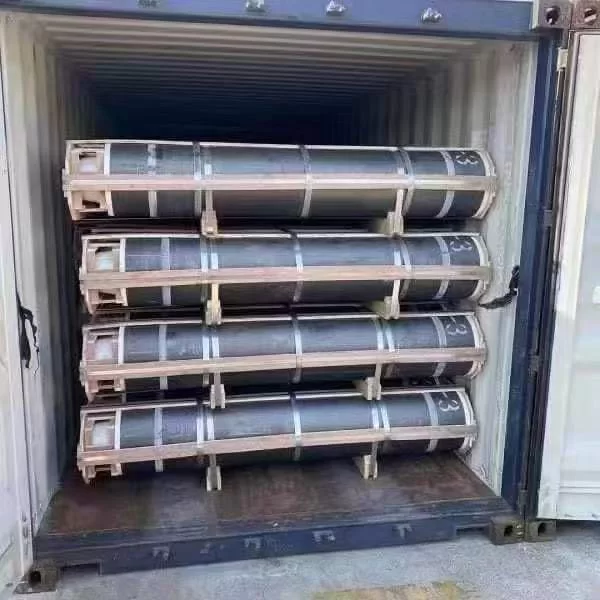
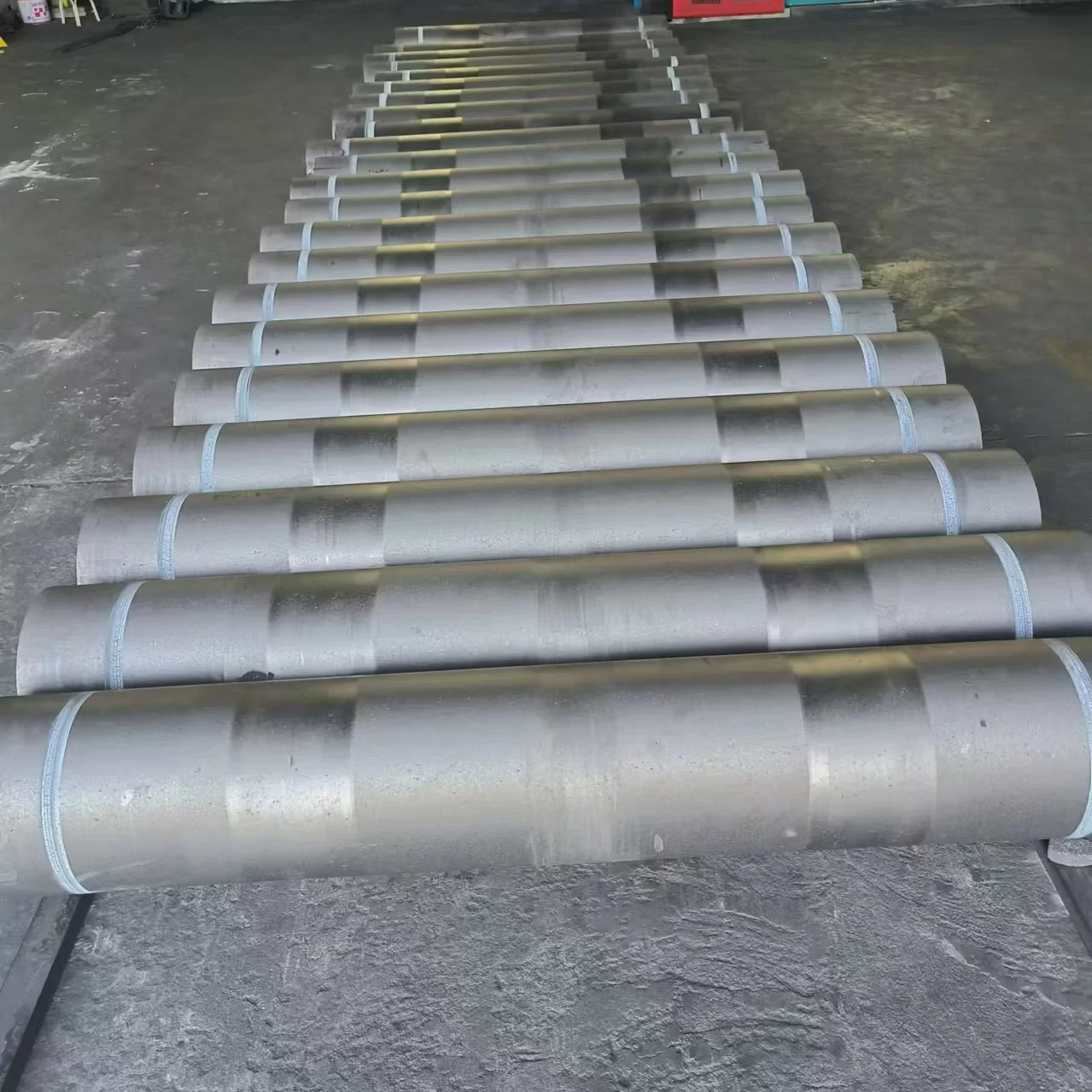
Advantages Of Graphite Electrode
1 The process of graphite electrode production is simple, high efficiency, small graphite loss.
2 Fast processing speed, lower production costs.
3 Different sizes available, including large diameter.
4 Our graphite electrodes are very durable and have a long service life.
Graphite Electrode is made of high-quality low ash materials, such as petroleum coke, needle coke and coal pitch.after calcining,burdening,kneading,forming,baking and pressure impregnation, graphitization and then precision machined with professional CNC machining.such of the products own characteristics with low resistivity, good electrical conductivity ,low ash, compact structure,good anti oxidation and high mechanical strength, Widely used in LF, EAF for steel making industry, Non-ferrous industry, silicon and phosphorus industry.so it is the best conductive material for electric arc furnace and smelting furnace.
Characteristics Of Graphite Electrodes
Our graphite electrodes are with low electric resistance, high density, high anti-oxidation capability, precise machining accuracy, especially with low sulphur and low ash will not give steel second time.
1. Low electric resistance
2. High density
3. Good electrical conductivity
4. High anti-oxidation capability
5. Precise machining accuracy
6. Low sulphur and low ash, not give steel second time impurity
Graphite Electrode is a conductor that releases electrical energy to heat and melt the charge in the form of an electric arc in an electric arc furnace.
Raw Material:Using coal pitch as binder, mainly made of petroleum coke and needle coke.
Process of graphite electrode: calcination, compounding, kneading, pressing, baking, impregnation, graphitization and machining
Features Of Rongxing Graphite Electrode
* Good oxidation resistance
* High mechanical strength.
* Needle coke content accounts for 80%
* Low electrical resistivity,good electrical conductivity
* Low ash content,Its ash content is controlled within 3%
* Dense and uniform structure,Low graphite electrode consumption
* Annual output of 80,000 tons, timely delivery
Graphite electrodes are used mainly in ladle furnaces,electric-arc furnace steelmaking,Yellow phosphorus furnace , Industrial silicon furnace or melting copper. They are presently the only products available that have the high levels of electrical conductivity and the capability of sustaining the extremely high levels of heat generated in this demanding environment.High Quality Needle Coke in HP&UHP graphite electrode,ensure the electrode application is perfect. Graphite electrodes are also used to refine steel in ladle furnaces and in other smelting processes.
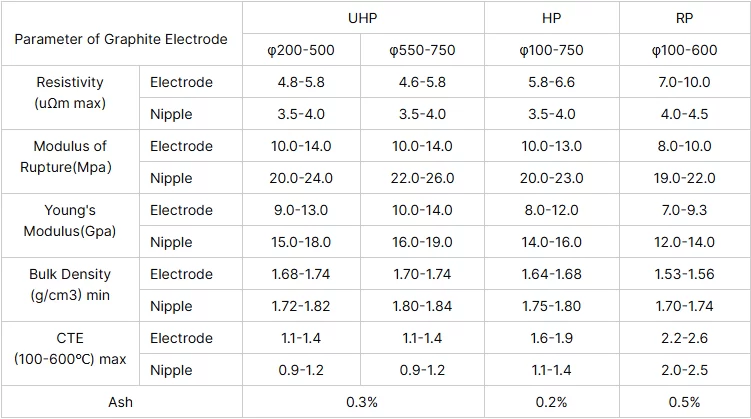
Parameter
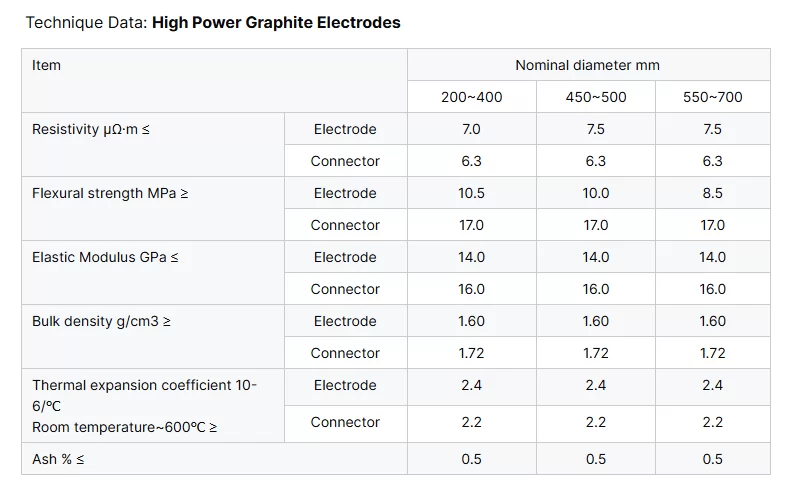
Specifications
How hp graphite electrode Is Manufactured from Coke to Precision-Machined Graphite
The manufacturing route of an hp graphite electrode determines the consistency of its electrical, thermal and mechanical performance during furnace operation. According to the product information, this graphite electrode is manufactured from low-ash carbon raw materials, mainly petroleum coke and needle coke, with coal pitch used as the binder. The stated needle coke content accounts for 80%, while ash content is controlled within 3%. These material characteristics form the basis for producing a dense and conductive graphite structure.
The production process follows a defined sequence: calcination, compounding, kneading, pressing, baking, impregnation, graphitization and machining. Calcination prepares the carbon raw materials for subsequent processing. After compounding, the materials are kneaded with the binder and then pressed into the required electrode form. Baking develops the carbonized structure, followed by impregnation as part of the stated production route.
Graphitization is the key stage that converts the carbon body into the graphite electrode used for high-temperature electrical conduction. After graphitization, professional CNC machining is used for precision finishing. This is particularly relevant for industrial users because electrode dimensions and machining accuracy affect installation and connection requirements. The product page specifically lists precise machining accuracy as one of the electrode's characteristics.
The manufacturing process is also described as efficient, with small graphite loss and fast processing speed. The product information identifies lower production costs as one of the manufacturing advantages, while different sizes, including large-diameter options, are available. For purchasers evaluating hp graphite electrode manufacturers, the complete process therefore provides a more meaningful basis for comparison than simply looking at the finished electrode appearance.
The product range also includes graphite electrodes, nipples and graphite blocks. This is relevant when the procurement requirement involves more than the electrode body itself. Rather than treating the electrode as a generic graphite product, buyers can evaluate the raw material system, production route, machining accuracy and available dimensions together when confirming whether the product matches their furnace requirements.
Manufacturing
stage | Product-related
focus |
Raw
material preparation | Petroleum
coke, needle coke and coal pitch |
Calcination
and compounding | Preparation
of the carbon material system |
Kneading
and pressing | Formation
of the electrode body |
Baking
and impregnation | Development
of the processed structure |
Graphitization | Conversion
into graphite material |
CNC
machining | Precision
finishing and dimensional accuracy |
Electrical and Mechanical Performance of hp graphite electrode for Furnace Operation
The operating performance of an hp graphite electrode is based on a combination of electrical conductivity, density, thermal behavior and mechanical strength. The product page identifies low electrical resistance, good electrical conductivity, high density, high anti-oxidation capability and high mechanical strength among its principal characteristics. It also emphasizes precise machining accuracy together with low sulfur and low ash content.
Low electrical resistance and high conductivity enable the electrode to carry current and generate heating arcs for furnace melting, while reliable thermal conductivity suits high-temperature working environments.
Its high density and uniform compact structure cut electrode consumption and deliver long service life for continuous furnace operation.
Strong oxidation and thermal shock resistance maintain stability under extreme thermal cycling. With low sulfur and ash (≤3%), the electrode avoids introducing secondary impurities into molten steel, a critical purchasing index for steelmaking.
For buyers comparing hp graphite electrode suppliers, the appropriate evaluation should therefore cover several properties simultaneously: electrical resistance, electrical conductivity, density, oxidation resistance, mechanical strength, sulfur and ash content, and machining accuracy. Focusing on only one specification can overlook how the electrode is intended to perform as an integrated furnace component.
The product page also describes HP graphite as providing reliable conductivity and strength for steelmaking, with the current application information identifying medium-power steel production as an appropriate use. This makes the product positioning particularly relevant for users who need a high-power electrode for EAF and LF operations without turning the page into a generalized comparison of unrelated graphite materials.
Evaluating hp graphite electrode price Through Material Efficiency and Furnace Requirements
When assessing hp graphite electrode price, the purchase decision should not be based on the quotation alone. The supplied product information identifies several factors that influence the overall value of the electrode, including efficient production, small graphite loss during manufacturing, fast processing, long service life, low electrode consumption and the availability of different sizes.
The raw material system is one of the first factors to examine. The product uses petroleum coke and needle coke as the main carbon materials and coal pitch as the binder. The stated needle coke content accounts for 80%, while ash content is controlled within 3%. These details give procurement teams concrete product information to review when comparing quotations from different sources.
Production efficiency is another factor. The stated manufacturing process includes calcination, compounding, kneading, pressing, baking, impregnation, graphitization and machining. The product information describes the production process as efficient, with small graphite loss and fast processing speed. It also states an annual output of 80,000 tons and timely delivery, which can be relevant when planning regular industrial supply.
Furnace compatibility should also be considered before comparing the hp graphite electrode price between different specifications. The product is mainly used in electric arc furnaces and ladle furnaces for steelmaking. The stated application range also includes non-ferrous industries, silicon and phosphorus industries, yellow phosphorus furnaces, industrial silicon furnaces and copper melting. Different furnace conditions can therefore require different electrode dimensions and configurations.
The distinction between HP and uhp graphite electrode should likewise be handled according to documented product requirements rather than assuming that one grade is automatically suitable for every furnace. The supplied product page identifies this product specifically as HP graphite and states that it is mainly used for EAF and LF steelmaking and medium-power steel production. That application positioning should be considered when selecting the appropriate electrode grade.
Size is another practical factor affecting procurement. The product information confirms that different sizes are available, including large diameters. Consequently, the purchasing specification should identify the required diameter and machining configuration before price comparison. An apparently lower quotation may not represent an equivalent product if the dimensions or machining requirements differ.
For industrial procurement, a more useful cost evaluation therefore combines the quoted price with electrode consumption, durability, material purity, electrical performance, machining accuracy, available size and supply capability. This approach keeps the purchasing decision tied to the actual characteristics documented for this HP graphite electrode rather than introducing unsupported economic claims.
Where hp graphite electrode factory Products Are Used in EAF, LF and Smelting
The application range of an hp graphite electrode factory product should be evaluated according to the furnace process for which the electrode is intended. The supplied product information identifies EAF and LF steelmaking as major applications, while also listing non-ferrous industry, silicon and phosphorus industry, yellow phosphorus furnaces, industrial silicon furnaces and copper melting.
In an electric arc furnace, the graphite electrode acts as a conductor that releases electrical energy through an electric arc to heat and melt the furnace charge. This explains why low electrical resistance and good electrical conductivity are central characteristics of the product. The electrode also needs to maintain its physical integrity under the high-temperature environment associated with arc furnace operation.
In ladle furnaces, graphite electrodes are used for steel refining. The product page specifically identifies LF steelmaking and states that graphite electrodes are also used to refine steel in ladle furnaces and other smelting processes. The low sulfur and low ash characteristics are relevant here because the product information states that these properties help prevent secondary impurities from entering the steel.
The electrode is also positioned for industrial silicon and phosphorus-related furnace applications. These are high-temperature industrial processes in which electrical conductivity and resistance to demanding thermal conditions are important. The same product information lists melting copper and non-ferrous applications, extending the electrode's use beyond conventional steelmaking.
The available dimensions are another consideration when selecting an electrode for an existing furnace. The product page states that different sizes are available, including large-diameter electrodes. Professional CNC machining is used for precision machining, while precise machining accuracy is listed among the product characteristics. These points are important when an electrode needs to correspond to an established furnace connection and installation configuration.
For material classification, carbon graphite powder may appear within the broader carbon-material supply chain, but it is not a replacement for this electrode. Likewise, Artificial Graphite Powder is a separate graphite material category. The HP graphite electrode has a dedicated manufacturing route involving forming, baking, graphitization and precision CNC machining, and its stated purpose is electrical conduction in high-temperature furnace applications.
How to Select Among hp graphite electrode suppliers for Different Furnace Requirements
Choosing among hp graphite electrode suppliers requires a product-level review of material composition, manufacturing process, performance characteristics, dimensions and application. The supplied product information gives buyers several concrete points to verify before placing an industrial order.
Material composition should be checked first. This product uses petroleum coke and needle coke as its principal carbon raw materials, with coal pitch as the binder. The product information also states that needle coke content accounts for 80%. Ash content is controlled within 3%, while low sulfur and low ash are emphasized as characteristics intended to reduce the introduction of secondary impurities into steel.
The second checkpoint is the manufacturing route. The stated process includes calcination, compounding, kneading, pressing, baking, impregnation, graphitization and machining. Professional CNC machining is then used for precision finishing. This sequence is particularly useful for procurement teams because it connects the finished electrode with its actual manufacturing process rather than presenting only a general material description.
Performance should then be evaluated against the intended furnace. The product is characterized by low electrical resistance, good electrical conductivity, high density, high anti-oxidation capability, good oxidation resistance and high mechanical strength. Thermal-shock resistance and precise machining accuracy are also identified. These characteristics should be reviewed together with the furnace application and required electrode dimensions.
Size selection is another practical step. The product is available in different sizes, including large diameters. Buyers should therefore confirm the required dimensions before comparing quotations or suppliers. The product range also includes nipples and graphite blocks, which may be relevant when the procurement requirement involves associated graphite components.
Supply capability is also stated on the product page. The annual output is listed as 80,000 tons, with timely delivery identified as a supply feature. For ongoing furnace operations, production capacity and delivery capability can be considered together with the product's technical characteristics.
Finally, grade selection should remain application-oriented. The product page identifies HP graphite electrode mainly for EAF and LF steelmaking and describes it as suitable for medium-power steel production. Buyers comparing HP with other electrode grades should therefore use the actual furnace requirements and documented specifications as the basis for selection rather than assuming that a higher grade is automatically necessary.
For procurement teams, the most practical evaluation sequence is to confirm the furnace application first, then review raw materials, electrical characteristics, density, oxidation resistance, mechanical strength, sulfur and ash content, dimensions, machining accuracy and supply capability. This keeps the selection process closely aligned with the actual HP graphite electrode offered on the product page.